 |
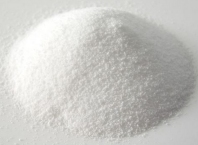
Iodized salt is table salt mixed with a minute amount of various salts of the element iodine. A note about iodine: In addition to preventing goiter, it is key in regulating the thyroid. If you are making all your food from scratch, not using fortified salt or any other iodine-fortified products, you might consider a supplement. My doctor almost put me on thyroid hormones! Supplement worked. :) Sodium content per teaspoon: 2300 mg (USRDA maximum) |
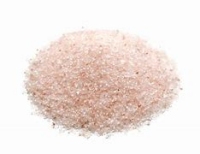 |
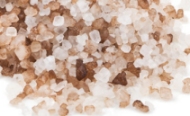
Pink Himalayan salt is a type of salt that’s naturally pink in color and mined near the Himalayas in Pakistan. Many people claim that it’s loaded with minerals and is often thought to be much healthier than regular table salt. NOT to be confused with the pink salt used in curing meats! That is NOT something you want to eat! (See Sodium Nitrite.) |
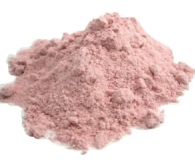 |
Kala namak is a kiln-fired rock salt with a sulphurous, pungent smell used in the Indian subcontinent. It is also known as "Himalayan black salt." The sulphuric smell makes it ideal for use in egg substitute dishes. Sodium content per teaspoon: 1261 mg |
 |
Smoked salts are sea salt flakes that have been infused with smoke from real, untreated wood. No artificial flavors or colors are used. The salt is smoked with bark-free woods for up to two weeks. Often used in vegan meat substitute dishes. An in-depth view on types of smoked salt can be found at The Salt Box |
Salty Notes and References:
|
Kosher salt and some sea salts may have larger crystal sizes than table salt, so they may have less sodium by volume (e.g., by teaspoon or tablespoon). A teaspoon of table salt has about 2,300 mg of sodium, but a teaspoon of sea salt or kosher salt may have less sodium simply because fewer crystals fit on the spoon.
Sea salt is obtained directly through the evaporation of seawater. It is usually not processed, or undergoes minimal processing, and therefore retains trace levels of minerals like magnesium, potassium, calcium and other nutrients. Table salt, on the other hand, is mined from salt deposits and then processed to give it a fine texture so it’s easier to mix and use in recipes. This processing strips table salt of any minerals, and additives may be used to prevent clumping. A new study claims that 90 percent of sea salt contains microplastics. Other studies have found microplastics in tap water, beer, and canned seafood. Microplastics are tiny particles of plastic debris that leach chemicals into the water and pose serious health risks to birds, marine life, and humans. |
| My OWN preference, is to use Pink Himalayan salt MOST of the time, unless smoked or kala namak would be better suited for the dish, and I continue taking the iodine supplement. You should draw your own conclusions, with your doctor's input, as too much iodine can also be a bad thing!! |